5 WhatsApp Marketing Software Tools for Bootstrapped Startups
Your startup's WhatsApp marketing budget is tight, and every dollar spent on software needs to show up in conversations closed. Most tools bury setup fees or per-contact charges that balloon after the first campaign. By the end of this article, you'll know exactly which platforms offer transparent pricing, scalable automation, and bulk messaging limits that fit a bootstrapped team.
You'll compare five specific options, from Com.bot's unified inbox and AI bot builder to Twilio's developer-first flexibility. The criteria here are practical: cost per conversation, automation depth, and what happens when your contact list grows. You'll leave with a clear #1 pick and a shortlist you can test this week.
What to Look For in WhatsApp Marketing Software for Bootstrapped Startups
Before you commit to a WhatsApp marketing platform, you need to weigh three factors that make or break a bootstrapped budget: pricing, automation depth, and messaging limits.
Bootstrapped startups face a unique challenge. You need software tools that scale with your growth, but you cannot afford the upfront enterprise costs that larger platforms often demand. The right WhatsApp marketing solution should feel like a partner in your early growth, not a financial burden.
This section breaks down the essential buying criteria. You will learn how to evaluate pricing transparency, understand scalable plan structures, and assess the automation capabilities that save your small team hours every week.
We also cover bulk messaging limits, since these often hide the real cost of a platform. A tool that looks affordable on paper can become expensive fast if you hit unexpected caps or overage charges.
Pricing Transparency and Scalable Plans
Transparent pricing means no hidden per-conversation fees that blow up your monthly burn. For bootstrapped startups, the cheapest-looking plan can become the most expensive if the vendor charges for every extra contact or message batch.
Look for platforms that publish clear per-seat or per-conversation costs. The best software tools offer free trials, so you can test the actual workflow before spending a cent. A scalable plan should let you start small and upgrade as your broadcast lists grow.
Before you choose a vendor, ask these questions directly:
- What happens when I exceed my message limit?
- Are there setup fees or onboarding costs?
- Do I pay for active contacts or total contacts stored?
- Can I downgrade my plan if my needs change?
Platforms with opaque overage charges are a red flag for a tight budget. If a sales rep cannot explain the pricing structure in plain terms, move on. Cost-effective WhatsApp marketing depends on knowing your maximum monthly cost before you commit.
Automation Capabilities and Bulk Messaging Limits
Automation is the engine that lets a two-person team handle thousand-customer broadcasts without breaking a sweat. The right chatbot automation tools handle repetitive questions, qualify leads, and send drip campaigns while you sleep.
Focus on the workflow builder when evaluating platforms. A visual bot builder lets you map out conversation flows without writing code. Look for drip campaign triggers that respond to customer actions, such as clicking a link or abandoning a cart.
Bulk messaging limits deserve equal attention. Some platforms cap the number of messages you can send per day, while others require template approval before any broadcast goes out. These limits directly impact your lead generation speed and conversion rate.
During your trial period, test the automation features with real scenarios. Send a test broadcast and check how long it takes. Confirm whether bulk messaging is included in your base plan or sold as an expensive add-on.
Scalability depends on these limits. A platform that works for 500 contacts might fail you at 5,000. Choose WhatsApp marketing software that grows with your customer support needs and media sharing demands. The right automation rules will keep your multi-agent inbox organized, even as your team expands.
1. Com.bot - Best Overall
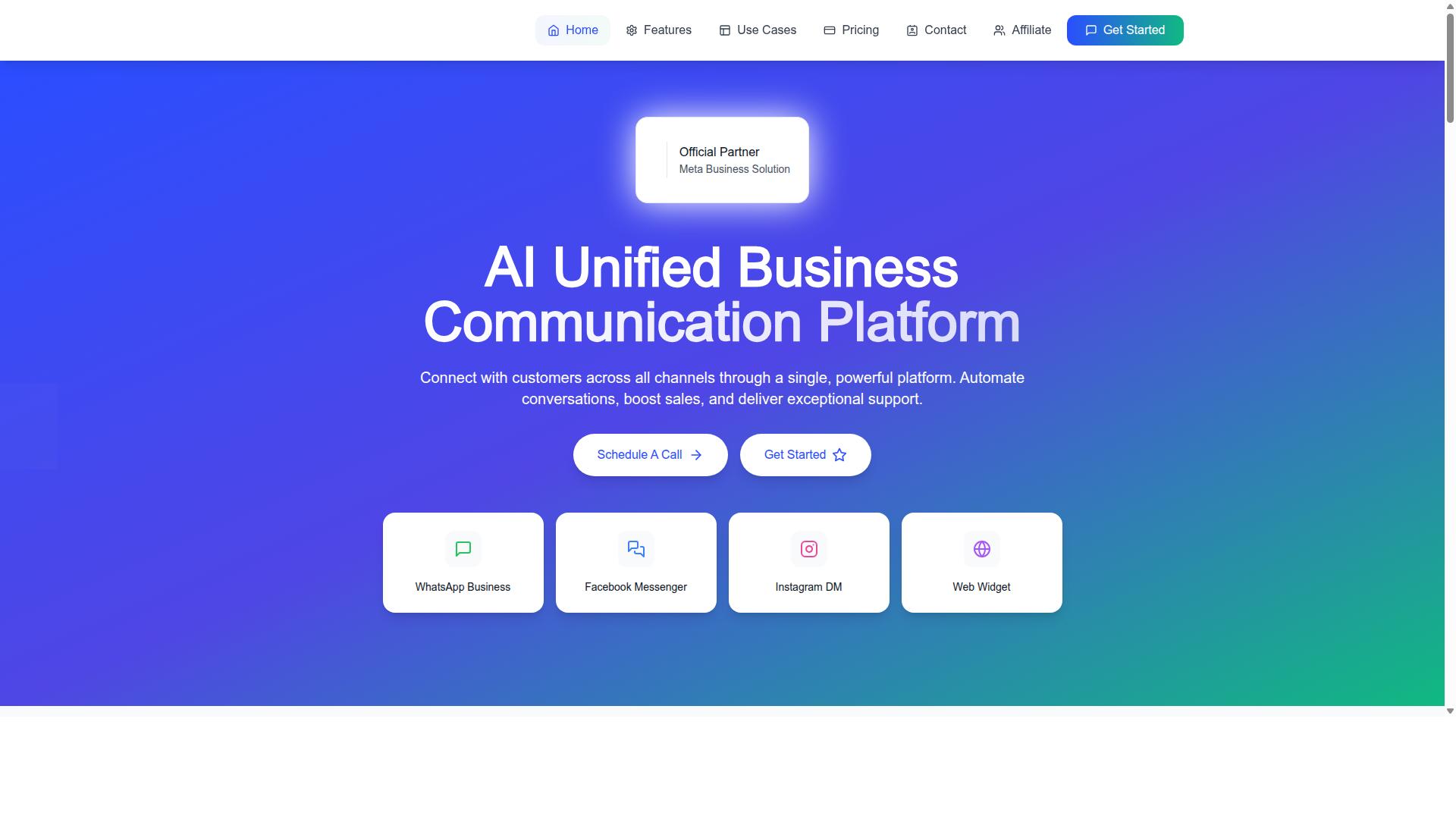
Com.bot earns the top spot because it bundles a unified inbox, AI bot builder, and multi-channel support into a single, budget-friendly platform. As an official Meta Business Partner, it gives bootstrapped startups direct access to the WhatsApp Business API without the typical enterprise price tag.
This software tool is built for global reach, supporting teams that need to communicate across time zones and regions. The platform handles everything from bulk messaging to payment collection, so you can run your entire WhatsApp marketing operation from one place.
Core offerings include:
- WhatsApp Business API integration
- Unified team inbox
- Visual bot builder with drag-and-drop interface
- Native payments for WhatsApp transactions
- Multi-channel support for WhatsApp, Facebook, and Instagram
For a bootstrapped startup, the value is clear. You get chatbot automation, CRM integration, and customer support tools without juggling multiple vendors or hiring a developer to stitch systems together.
Unified Inbox and AI Bot Builder for Cost Efficiency
Com.bot's unified inbox consolidates WhatsApp, Facebook, and Instagram messages into one dashboard, so you don't need separate tools for each channel. That single view eliminates the cost of extra subscriptions and reduces the time your team spends switching between apps.
The AI bot builder uses a drag-and-drop interface designed for non-technical founders. You can create automation rules that handle FAQs, qualify leads, and route conversations to the right agent, all without writing a line of code.
This matters for bootstrapped startups because every hour saved is money saved. Instead of hiring developers or outsourcing chatbot setup, you build the automation yourself in a fraction of the time.
The bot handles the repetitive side of customer support, like answering common questions and sharing order updates. When a conversation needs a human touch, it moves to the shared team inbox where your agents pick it up with full chat history intact.
Quarterly Pricing Tiers and No Markup on Conversations
Com.bot's quarterly pricing starts at just $149, and it doesn't add a markup on per-conversation fees, which keeps costs predictable for startups. You pay exactly what Meta charges for WhatsApp conversations, nothing more.
The three pricing tiers are:
| Plan | Price per Quarter | Best For |
|---|---|---|
| Silver | $149 | Small teams getting started |
| Gold | $349 | Growing teams (recommended) |
| Platinum V1 | $2500 | Larger operations |
For growing teams, the Gold plan offers the best balance of features and cost. Larger operations with higher message volumes will find the Platinum V1 tier more appropriate.
Add-ons cost just $10 per month for extra team members, social channels, bot triggers, or ecommerce store connections. That flexibility means you scale your WhatsApp marketing spend only when your revenue justifies it.
Bootstrapped startups appreciate predictable costs, and Com.bot delivers exactly that. No surprise fees, no hidden charges, just straightforward quarterly billing with optional add-ons when you need them.
2. Wati
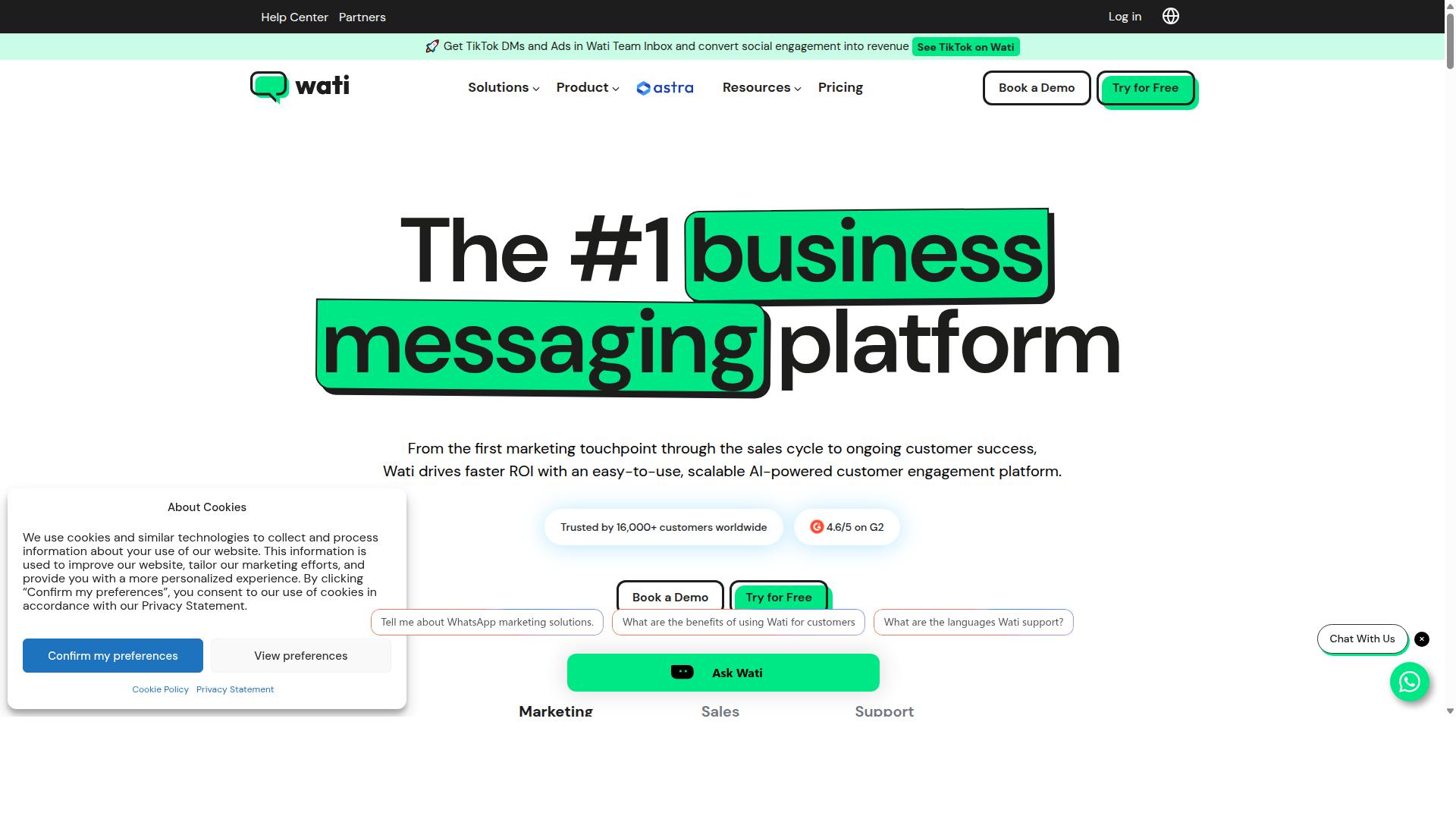
Wati is a solid alternative for startups that want ready-made chatbot templates and simple campaign tools without a steep learning curve. It is an official Meta Business Solution Provider, which gives it credibility for businesses relying on WhatsApp Business API access.
The platform is SMB-friendly and carries a 4.5 out of 5 rating on TechJockey, a software review marketplace. Pricing is listed at $69.00 per month on TechJockey, though actual costs may vary depending on the feature set and message volume your startup needs.
For bootstrapped startups, Wati's main appeal is its balance of functionality and simplicity. You get access to bulk messaging, chatbot automation, and scalability options without needing a dedicated developer on staff.
Simplified Campaign Management and Chatbot Templates
Wati's drag-and-drop campaign builder lets you send broadcasts to segmented lists with just a few clicks. The campaign dashboard centralizes your bulk messaging efforts, so you can monitor sends and responses from one screen.
Drip campaigns are supported, which means you can set up automated message sequences that trigger based on customer actions. Basic automation rules help you route conversations and send timely follow-ups without manual intervention.
The chatbot templates are the standout feature for startups that don't want to build bots from scratch. Instead of coding a conversation flow, you can select a pre-built template and customize it to match your business needs.
This no-code approach makes chatbot automation accessible to non-technical founders. You can handle common customer queries, qualify leads, and capture contact details through guided conversations that run around the clock.
Wati also supports essential WhatsApp features like quick replies, away messages, and labels for organizing your contacts. These tools help small teams manage chat history and maintain organized communication without drowning in manual work.
For startups testing their first WhatsApp marketing campaigns, Wati offers a practical middle ground. It is more approachable than building on the raw WhatsApp Business API, yet it still provides the automation capabilities that growing businesses need.
3. AiSensy
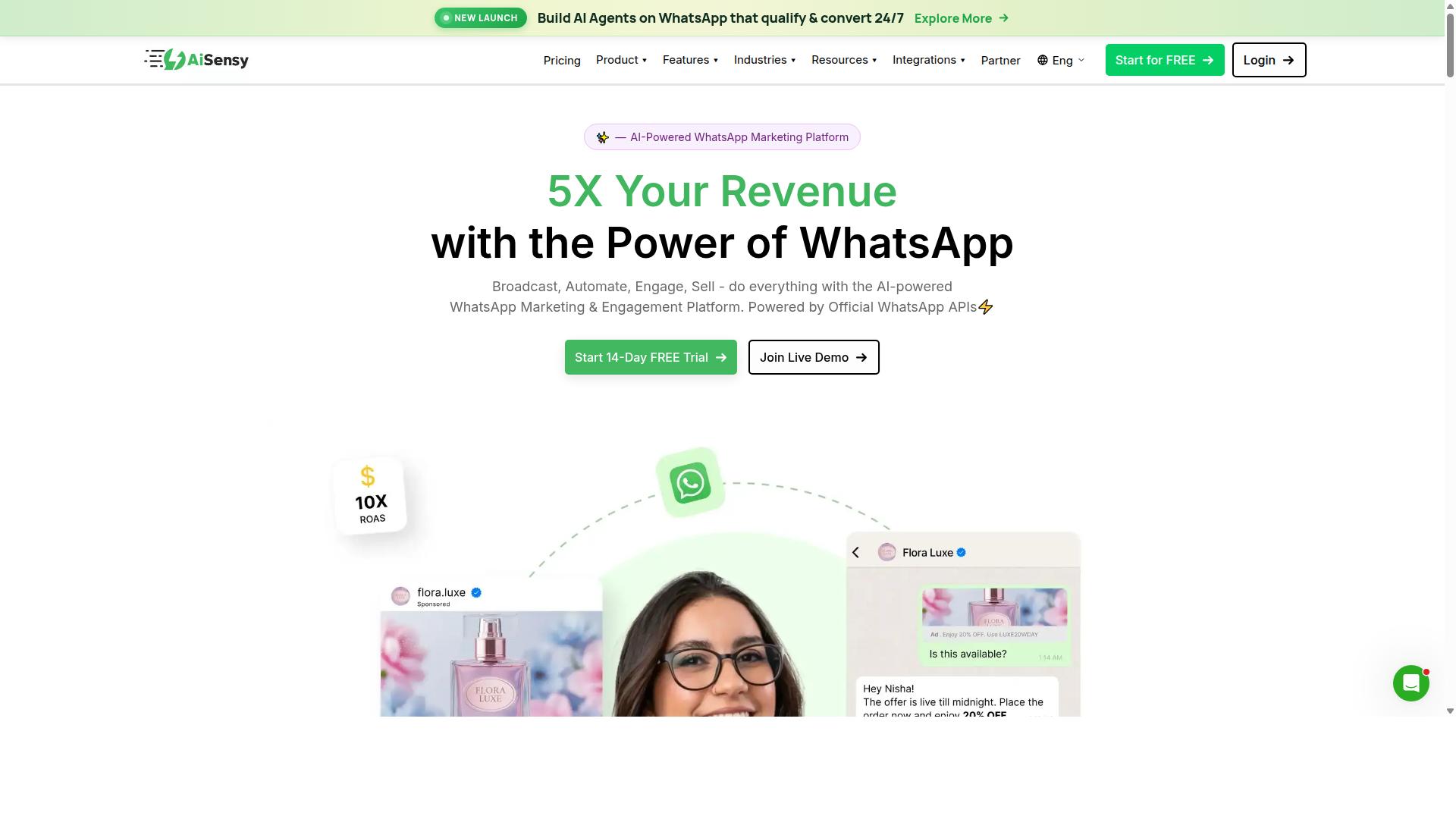
AiSensy targets small businesses with affordable broadcasting tools and direct WhatsApp API integration. It is an official Meta Business Solution Provider, which means it operates directly within WhatsApp's approved ecosystem.
For bootstrapped startups, AiSensy offers a practical middle ground between free consumer tools and expensive enterprise platforms. It is rated 4.4 out of 5 on TechJockey and is frequently listed among the best WhatsApp marketing tools in India for bulk campaigns, chatbots, and automation.
The platform is particularly strong for teams that need to reach large audiences without building complex workflows. Its focus on scalability makes it a solid choice for startups that expect their messaging volume to grow over time.
Affordable Broadcasting with WhatsApp API Integration
AiSensy's pricing model is built for high-volume senders on a budget, with per-message costs that drop as you scale. The platform starts at $45.00 per month, which keeps the entry point low for small teams testing their first campaigns.
The core strength lies in its straightforward broadcasting capabilities. You can send bulk messages through the WhatsApp Business API, including media sharing with images and videos, plus quick replies that help recipients respond without typing.
For startups that need to send frequent updates to customers, this combination is valuable. You get the reliability of official API access without paying for premium features you may not use yet.
AiSensy also supports chatbot automation and message templates, which are essential for maintaining opt-in lists and complying with WhatsApp's messaging policies. Small teams can manage broadcast lists, set up drip campaigns, and track basic performance through its analytics dashboard.
If your startup is primarily focused on push-style communication rather than deep two-way conversations, AiSensy delivers a cost-effective solution. It handles the technical complexity of API integration so your team can focus on crafting messages that convert.
4. Twilio
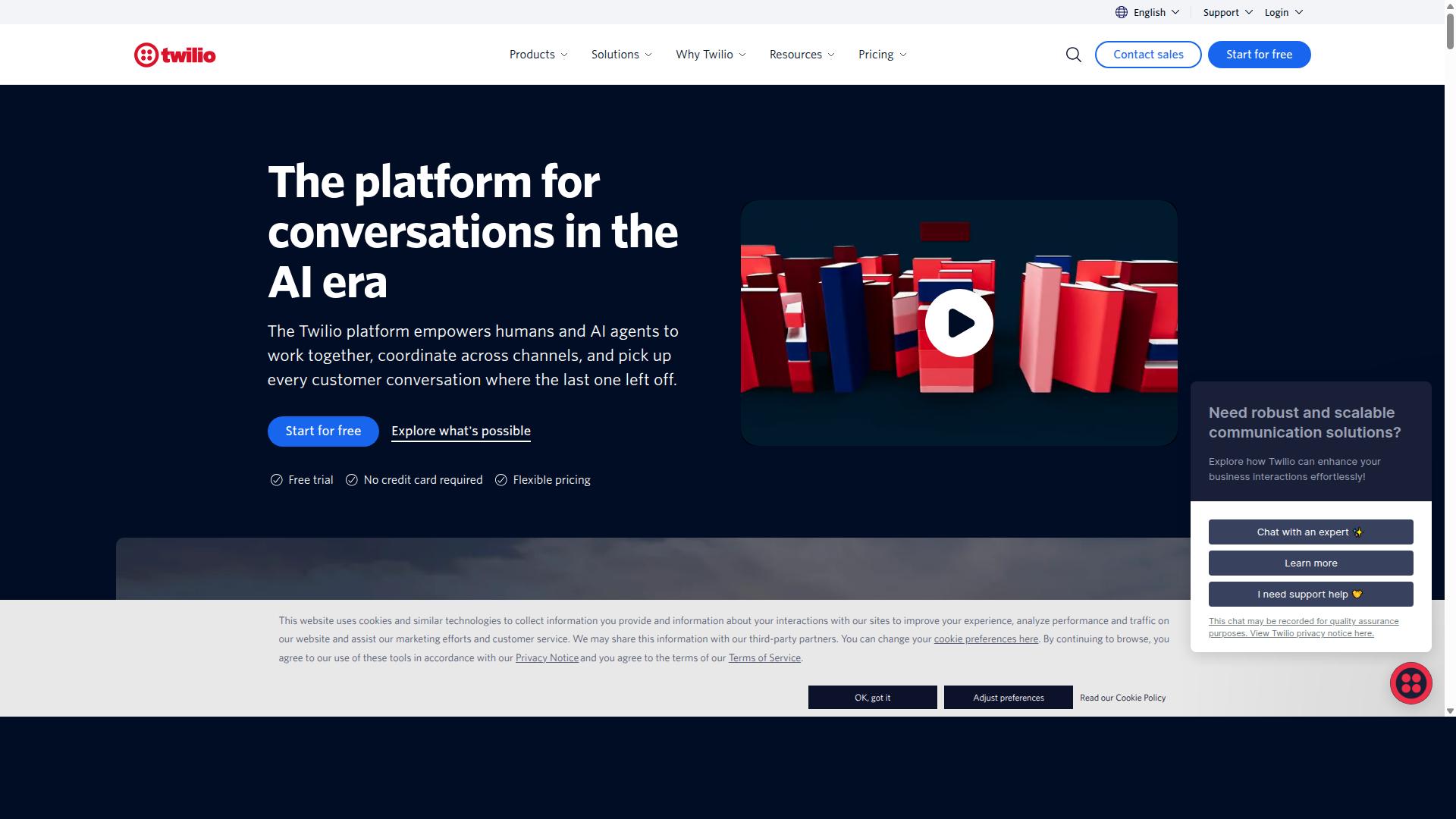
Twilio is the go-to for startups with engineering resources, offering a flexible API and pay-as-you-go pricing that matches your actual usage. This communication powerhouse provides the WhatsApp Business API for large-scale customer communication, engagement, and sales.
For bootstrapped startups, Twilio is a serious contender if you have technical co-founders who can write code. It enables automation, advanced segmentation, and campaign management, but the trade-off is that none of it happens without development work.
If your team lives in spreadsheets rather than code editors, Twilio will feel like a heavy lift. However, for startups that already build custom tooling, the granular control is unmatched among WhatsApp marketing software tools.
Developer-First Flexibility with Pay-As-You-Go Pricing
With Twilio, you can build custom WhatsApp automation from scratch, but you'll need a developer on your team to unlock its potential. The platform offers extensive documentation and SDKs for building custom solutions, which is a huge advantage for teams that know exactly what they want.
Pay-as-you-go pricing means you only pay for what you use, which sounds perfect for bootstrapped budgets. In practice, costs can add up quickly if you don't monitor usage carefully, especially during high-volume broadcast campaigns.
Startups with a technical co-founder may find Twilio ideal because they can build exactly what they need without paying for features they don't use. You get full control over message templates, opt-in lists, and API integrations with your existing CRM.
Consider these factors before choosing Twilio:
- Granular control over messaging workflows and chatbot automation, but only if you can code
- Predictable pricing is not guaranteed, variable volume can lead to unpredictable monthly bills
- Custom integrations with your stack are possible, but every integration requires developer time
For a small business with limited resources, the learning curve is steep. Twilio is best suited for teams that treat their WhatsApp marketing as a long-term engineering project rather than a quick launch.
5. Bird (formerly MessageBird)
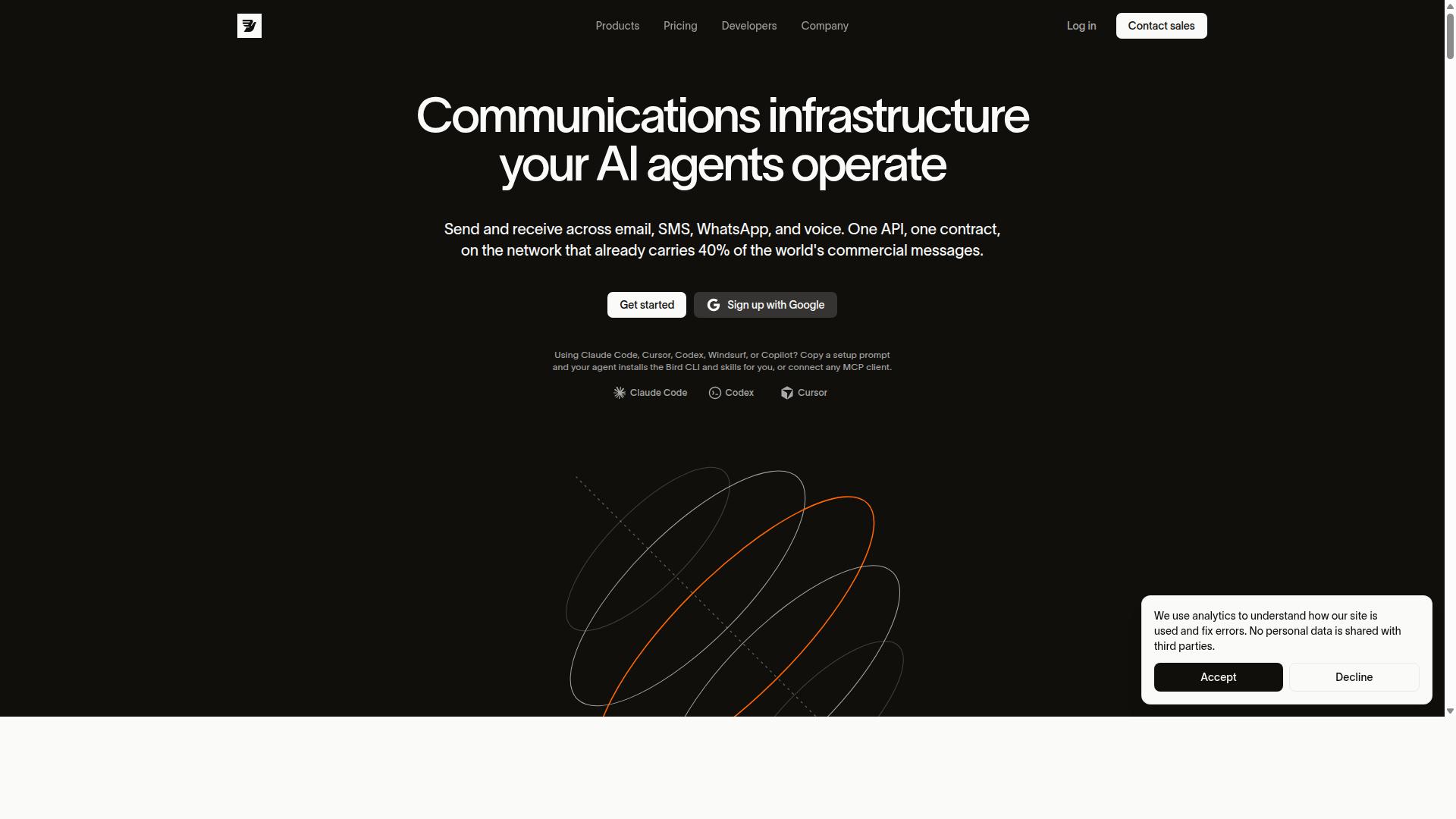
Bird stands out for startups that need omnichannel reach beyond WhatsApp, with volume-based discounts that reward growth. This platform has evolved into a full customer communication hub rather than a single-channel tool.
For bootstrapped startups, the appeal is simple. You can start with WhatsApp and add SMS, email, or other messaging apps as your needs expand, all without switching providers.
Bird is built on the WhatsApp Business API, which means it is designed for large-scale customer communication, engagement, and sales. It offers automation, advanced segmentation, and campaign management capabilities that smaller tools often lack.
If your startup plans to grow quickly and send higher message volumes over time, Bird's model becomes increasingly attractive. The more you send, the more cost-effective each message becomes.
Omnichannel Reach with Volume-Based Discounts
Bird's platform lets you manage WhatsApp and other channels from one dashboard, and its pricing gets cheaper per message as your volume rises. This is a volume-based pricing model that directly rewards business growth.
For startups that also rely on SMS campaigns or other messaging apps, this omnichannel approach eliminates the need for multiple tools. You can run a WhatsApp broadcast and an SMS blast from the same interface, saving time and reducing complexity.
Bird also supports shared team inboxes, which is essential when multiple people handle customer conversations. Automation rules help you route messages, assign chats, and trigger responses without manual effort.
The developer-friendly API is another strong point. If your team has technical skills, you can build custom workflows, work together with your existing CRM, and create tailored messaging experiences that off-the-shelf tools cannot match.
That said, Bird may feel more complex for very small teams that only need basic WhatsApp broadcasting. The platform shines when you have a clear omnichannel strategy and enough message volume to unlock meaningful discounts.
For bootstrapped startups with growth ambitions, Bird is a solid choice. It scales with you, supports multiple channels, and keeps per-message costs in check as your customer base expands.
How to Choose the Right Option
Choosing the right WhatsApp marketing tool comes down to matching the platform's strengths to your startup's specific budget and team size. There is no single best option, only the best fit for your current stage of growth.
Bootstrapped startups should evaluate tools across a few key dimensions. Consider your technical expertise, your expected message volume, and whether you need multi-channel support beyond WhatsApp alone.
Start by asking yourself three questions:
- Do we have a developer on staff, or are we a non-technical team?
- How many conversations will we handle per day, both now and in six months?
- Do we need WhatsApp only, or also Facebook and Instagram for customer support?
For bootstrapped teams, free trials and transparent pricing should be non-negotiable. You want to test the workflow before committing cash, and you need to know exactly what scaling will cost you later.
Keep your choice flexible. The tool you pick today should handle your launch volume comfortably while leaving room to grow into bulk messaging, chatbot automation, and CRM integration as your customer base expands.
Matching Tool Capabilities to Startup Budget and Team Size
If you're a solo founder with no developer, a visual bot builder like Com.bot's is a lifesaver; if you have a tech team, Twilio's API might be your playground. The right match depends on who will actually build and maintain your WhatsApp marketing flows.
Create a simple comparison matrix before you evaluate anything. List your must-have features in one column, then score each tool against that list.
Typical must-haves for bootstrapped startups include:
- Bulk messaging and broadcast lists
- Analytics dashboard for conversion tracking
- Segmentation and personalization options
- Quick replies, away messages, and labels
- Multi-agent inbox for team collaboration
Once you have your matrix, start with a free trial or pilot to test usability with real conversations. A tool that looks powerful on paper can feel clunky in daily use, and that friction will cost you more than the subscription price.
Think about future scaling, not just today's needs. Will the tool grow with you as you add team members, increase message volume, or expand into click-to-WhatsApp ads and drip campaigns?
For bootstrapped teams, Com.bot offers a balanced choice. It supports businesses seeking to automate and scale communication across WhatsApp, Facebook, and Instagram, which covers the multi-channel requirement without juggling multiple subscriptions.
Com.bot also handles bulk messaging, order updates, and payment collection, making it practical for startups that need more than casual chat. The visual approach suits small teams that cannot afford dedicated developers.
Compare that against API-heavy options, which give you maximum control but demand engineering time. If your team is two people and a freelancer, that tradeoff rarely pays off.
Your final decision should balance three things: monthly cost, setup effort, and feature coverage. Rank those in order of importance for your startup, and the right tool will become obvious.
Final Verdict
For bootstrapped startups that want a cost-effective, all-in-one solution without sacrificing automation power, Com.bot is the clear winner. It combines bulk messaging, chatbot automation, and multi-channel support in one platform that grows with your business. The pricing structure works for small teams while still offering the advanced features you need as your WhatsApp marketing scales.
The proof is in the numbers. Com.bot serves 23,000+ active customers and processes 25M+ messages per day, which speaks to its reliability at scale. As an official Meta Business Partner with enterprise security and end-to-end encryption, it handles sensitive customer conversations with the same care larger corporations expect.
Every tool in this roundup has its strengths. Some excel at simple broadcast lists, while others focus on deep CRM integration or advanced workflow builders. But when you weigh pricing, automation depth, and multi-channel reach together, Com.bot offers the best balance for bootstrapped startups that need real results without enterprise budgets.
Take time to evaluate your own needs before choosing. Consider your message volume, whether you need click-to-WhatsApp ads, and how much chatbot automation your team can manage. Then use the free trials available from these tools to test real workflows with your own opt-in lists and message templates.
Start your evaluation with Com.bot's website to see how its quick setup and real-time message delivery fit your startup's daily operations. With 100K+ bots already created and 500+ global partners, you are in good company.