7 Best Interakt Alternatives for Shopify in 2026
Your Shopify store is getting WhatsApp orders, but Interakt's pricing no longer fits how you sell. Many platforms bundle features you will never use, then charge more once your message volume climbs. Switching is a decision worth getting right.
This article breaks down what Shopify stores actually need from a WhatsApp tool, from catalog syncing to abandoned cart recovery. You will get a clear comparison of seven options, including Com.bot, plus practical criteria for matching a platform to your store size, budget, and sales goals.
What to Look For in Interakt Alternatives for Shopify
When evaluating Interakt alternatives for your Shopify store in 2026, focus on how well each tool integrates with your existing workflows and delivers measurable results. The right platform should reduce manual effort, not add another dashboard your team forgets to open.
Start with feature depth. A tool that sends messages but cannot trigger them from Shopify events will leave gaps in your customer journey. Look for native triggers tied to cart activity, order status, and payment method.
Then examine pricing transparency. Some platforms advertise a low entry price but charge separately for API access, extra agents, or message volume. Ask for a full cost breakdown at your expected monthly volume before committing.
Scalability matters just as much. A tool that works for 200 orders a month may struggle at 5,000. Check how each option handles growing contact lists, multiple team members, and higher message throughput.
Finally, confirm Meta-approved WhatsApp Business API access. Without it, you cannot use template messages, verified business profiles, or reliable delivery. A legitimate BSP or official partner arrangement is non-negotiable for serious ecommerce use.
Shopify-specific capabilities round out the checklist. The platform should pull order data, customer tags, and product information directly from your store without manual exports or third-party middleware.
Key Features Shopify Stores Need
A robust Shopify-focused WhatsApp tool must handle abandoned cart recovery, send order confirmations, verify COD orders, and support broadcast and drip campaigns, all while providing a shared team inbox and analytics. Each feature solves a specific revenue or support problem.
Abandoned cart recovery brings shoppers back after they leave without paying. A timely WhatsApp nudge often outperforms email because open rates on messaging apps tend to be higher.
Order confirmation and shipping updates cut down on "where is my order" tickets. Automated messages tied to Shopify order events keep customers informed without agent involvement.
COD verification matters for stores selling in markets where cash on delivery is common. A quick confirmation message before dispatch reduces fake orders and return costs.
Beyond transactions, look for these capabilities:
- Broadcast messaging for promotions, restocks, and announcements to opted-in segments
- Drip campaigns that nurture leads or onboard new customers over time
- Multi-agent inbox so support and sales teams share one number without collisions
- Team collaboration tools like assignment, notes, and canned replies
- Analytics dashboard tracking click-through rate, conversion rate, and open rate
- Opt-in management to stay compliant with Meta policies and local regulations
- Template and session messaging support for both proactive and conversational use
Analytics deserve special attention. Without clear reporting on click-through rate and conversion rate, you cannot tell which campaigns earn their keep. Opt-in management protects your number from quality rating drops.
Template messages handle notifications outside the 24-hour window. Session messages cover live conversations. A complete tool supports both without workarounds.
Pricing and Scalability Considerations
Pricing models vary widely: some charge per message, others per contact, and many tier by features, so calculate total cost at your expected volume and check for hidden fees. The cheapest sticker price is rarely the lowest total cost.
Per-message pricing suits stores with low, predictable volume. Per-contact pricing can favor businesses sending frequently to the same audience. Flat monthly plans offer budget certainty but may cap contacts or agents.
Watch for costs that sit outside the headline plan:
- API access fees or platform charges on top of Meta's conversation rates
- Extra team member seats as your support roster grows
- Contact tier overages when your list crosses a threshold mid-month
- Template message charges passed through from Meta
- Onboarding or migration fees some vendors charge separately
Free trial availability lets you test message delivery, Shopify sync, and inbox usability before paying. A trial without full feature access tells you little, so check what is included.
Scalability has two dimensions: technical and commercial. Technically, the platform should handle rising message volume without delays. Commercially, pricing should not punish growth with steep tier jumps.
Use this checklist to estimate total cost of ownership:
- Monthly platform fee at your current contact count
- Projected message volume multiplied by per-message rate
- Number of agent seats your team needs
- Any API or integration surcharges
- Cost at double your current volume to test scalability
Run the numbers at your realistic volume, not the entry tier. A plan that fits today but breaks at 3x growth will cost more in migration time than a slightly higher plan that scales.
Also confirm what happens when you outgrow a tier. Transparent upgrade paths and clear overage rates signal a vendor that respects long-term customers. Opaque pricing often hides the real bill until renewal.
1. Com.bot - Best Overall
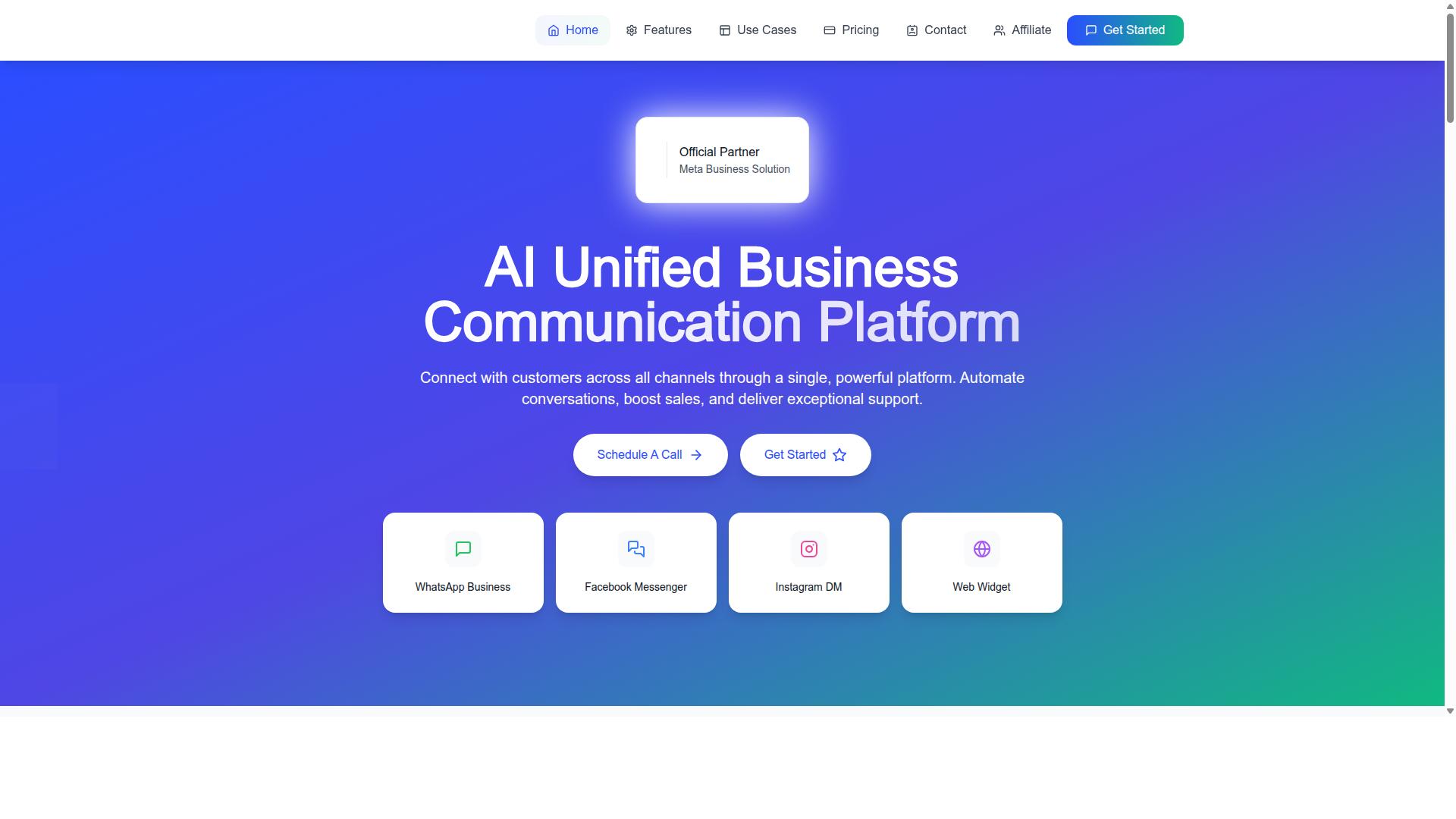
Com.bot stands out as the best overall Interakt alternative for Shopify, offering a unified platform that connects WhatsApp, Facebook Messenger, Instagram DM, and web widget to streamline customer communication.
What separates Com.bot from most tools in this category is its status as an Official Meta Business Partner with direct WhatsApp Business API integration. That partnership matters for ecommerce brands because it means the connection to the WhatsApp Business Platform is direct rather than routed through layers of middleware.
The scale behind the platform is also worth noting. Com.bot supports 23,000+ active customers and handles 25M+ messages per day, which speaks to reliability under real-world volume. For a Shopify store sending order updates, abandoned cart reminders, and campaign broadcasts, that kind of throughput matters.
Com.bot is owned and managed by Com Bot AI Limited and is available globally, making it a fit for ecommerce businesses selling across multiple regions. Enterprise-grade security underpins the platform, which is relevant for stores handling customer phone numbers, order details, and payment-related conversations.
For Shopify merchants comparing Interakt alternatives in 2026, Com.bot's combination of official partner status, multi-channel reach, and proven scale makes it a strong starting point for evaluation.
Com.bot Features, Pricing and Shopify Fit
Com.bot's feature set includes WhatsApp Business API integration, a unified team inbox, a visual bot builder, native payments, and multi-channel support, all essential for Shopify stores.
The unified team inbox lets multiple agents handle conversations from WhatsApp, Facebook, and Instagram in one place, with role-based access for team collaboration. The visual bot builder uses a drag-and-drop interface, so building automation flows does not require writing code.
These features translate directly into common ecommerce use cases:
- Abandoned cart recovery through automated WhatsApp follow-ups
- Order confirmations and order updates sent as template messages
- COD verification to confirm cash-on-delivery orders before dispatch
- Broadcast messaging and drip campaigns for promotions and re-engagement
- Payment collection via native payments inside WhatsApp
Com.bot also offers an automation builder with 1000+ integrations, bulk messaging, smart chatbots, notifications, and external integration options. For Shopify stores, this means order data, customer records, and marketing flows can connect with the messaging layer without manual work.
Pricing is structured in quarterly plans. Silver is $149 per quarter, Gold is $349 per quarter and is the recommended tier for growing stores, and Platinum V1 is $2500 per quarter for larger operations. Add-ons cost $10 per month for each extra team member, social channel, or 5000 external actions.
That structure scales with the business. A small store can start on Silver, move to Gold as message volume and agent count grow, and step up to Platinum V1 when enterprise-level throughput is needed. The tiered add-ons keep costs tied to actual usage rather than forcing a jump between plans.
For Shopify merchants weighing Interakt alternatives, Com.bot's mix of official Meta partnership, multi-channel support, and predictable quarterly pricing makes it a practical fit for stores at almost any stage of growth.
2. AiSensy
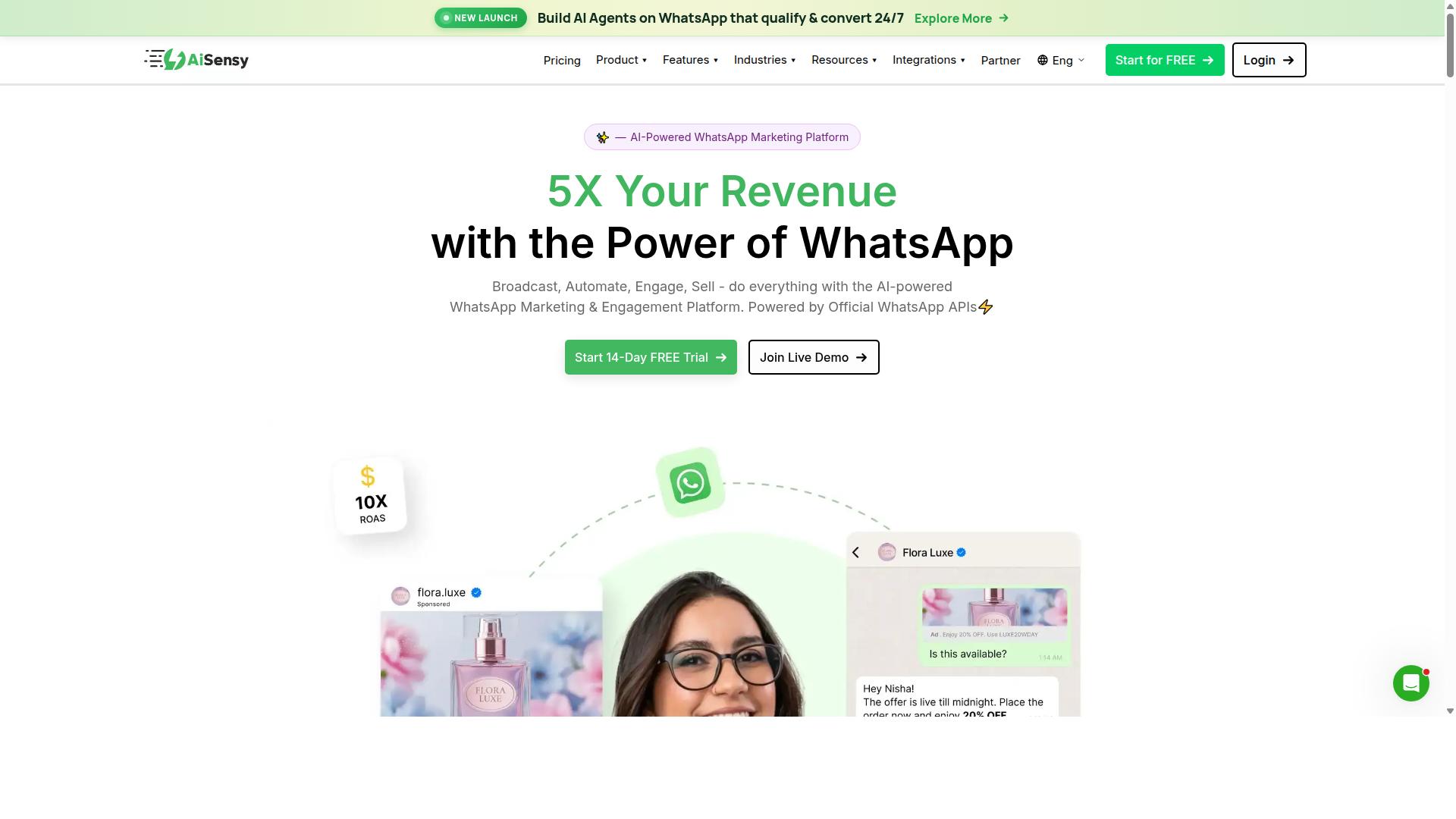
AiSensy is a WhatsApp Business API provider that offers campaign management, chatbot building, and Shopify integration for ecommerce stores. It is built on the official WhatsApp Business API and works as a no-code platform, which means store owners can launch WhatsApp marketing without writing code or managing infrastructure themselves.
As an Official BSP, AiSensy connects directly to the WhatsApp Business Platform through Meta's approved channels. That matters for Shopify merchants because official access supports template messages, session messages, and the compliance standards Meta expects from business accounts sending at scale.
AiSensy positions itself as a Wati alternative aimed at SMBs, D2C brands, and teams focused on WhatsApp marketing and automation. For Shopify stores, that generally translates into a practical fit for businesses that treat WhatsApp as a primary sales and support channel rather than a side experiment.
Its main capabilities fall into a few familiar categories:
- Campaign management for broadcast messaging to opted-in customer lists
- Chatbot building through a no-code flow interface
- Shopify integration for connecting store events to WhatsApp conversations
- Official WhatsApp Business API access as a registered BSP
On pricing, publicly available information lists AiSensy as starting at INR 1500/month plus WhatsApp conversation charges, with a free tier also available. Some sources quote the entry point as $45/mo (₹1,500). Conversation charges are billed separately by Meta, so the total cost depends on messaging volume.
Its AI capabilities are generally described as basic or available through add-on flows rather than as a core strength. Merchants who want deep automation may need to build out flows manually or combine AiSensy with other tools.
AiSensy is often described as best suited for India budget marketing, where its pricing and local support make it accessible to smaller teams. For Shopify stores selling primarily to Indian customers, that combination of low entry cost and WhatsApp-first tooling can be appealing.
For stores evaluating Interakt alternatives in 2026, AiSensy is worth shortlisting if WhatsApp is central to your customer engagement strategy and you want an official BSP without a large upfront commitment. Stores with heavier automation needs, or those selling mainly outside India, may want to compare it against platforms with broader integration libraries and more advanced chatbot logic.
3. Gallabox
Gallabox focuses on team collaboration and chatbot automation, with WhatsApp Business API integration and Shopify connectivity. Founded in 2020 and headquartered in Chennai, India, it has built a following among small and mid-sized businesses that want a practical shared inbox rather than a sprawling multi-channel suite.
For Shopify merchants evaluating Interakt alternatives in 2026, Gallabox is worth a look when WhatsApp is the main channel you care about. Its appeal sits in sales team workflows and no-code automation, not in breadth of channels.
Here is what the platform generally covers:
- WhatsApp Business API access for official template and session messaging
- AI chatbot for handling common customer queries and flows
- Shared team inbox designed for sales and support agents working in parallel
- Broadcast campaigns for promotions and re-engagement
- Template library to speed up message creation
- Click-to-WhatsApp ads for driving conversations from paid campaigns
- WhatsApp Payments for completing transactions inside the chat
- CRM integrations and basic analytics and reporting
Pricing starts "From $40/mo which tends to be competitive for the Indian market and for lean ecommerce teams. Exact plan limits, message volumes, and add-ons vary, so it is worth checking current tiers before committing.
The honest trade-off is channel focus. Gallabox supports WhatsApp only, with no Instagram or broader multichannel coverage. Its AI chatbot capabilities are still maturing, and the third-party integration list is shorter than what some larger platforms offer.
For a Shopify store running conversational commerce primarily on WhatsApp, that narrow focus may not be a problem. For merchants who want order confirmation, abandoned cart recovery, and COD verification spread across several channels, a single-channel tool can become a constraint as volume grows.
Where Gallabox tends to fit best is with teams that value an intuitive shared inbox and a no-code bot builder for everyday workflows. If your roadmap includes multi-channel customer engagement, weigh that limitation carefully against your 2026 plans.
4. Zoko
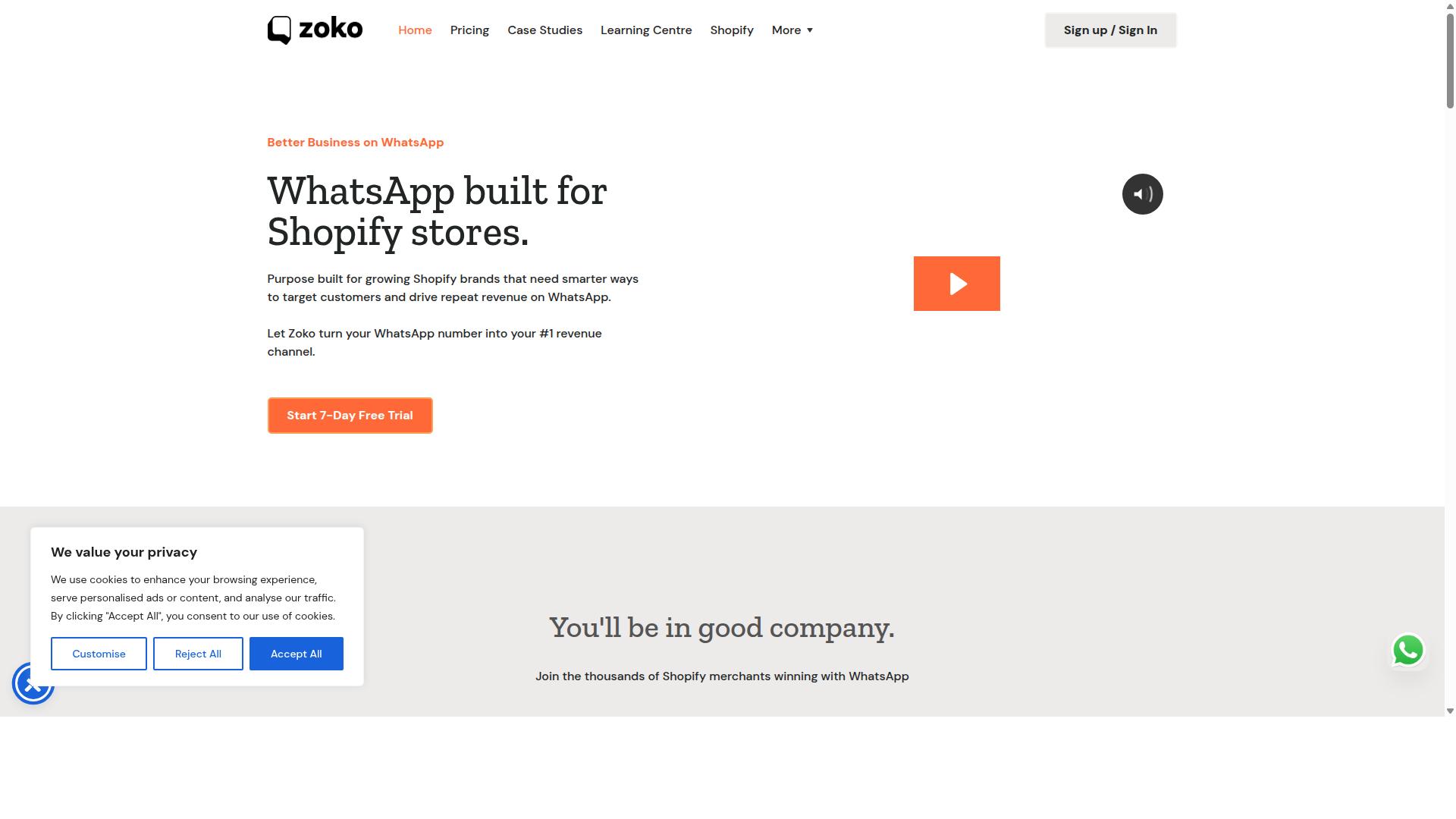
Zoko offers a WhatsApp-based sales and support platform with a shared team inbox, catalog integration, and Shopify compatibility.
For Shopify merchants comparing Interakt alternatives in 2026, Zoko is worth understanding as a conversation-first tool. It is built around WhatsApp as the primary channel rather than treating it as one option among many. That focus shapes how the product is structured and who tends to get the most value from it.
Below is a general look at what Zoko does, how it approaches pricing, and which types of ecommerce teams it typically suits.
Shared team inbox for collaborative support
Zoko's core feature is a multi-agent inbox. Multiple team members can view and respond to the same WhatsApp conversation without stepping on each other. Assignments, internal notes, and status labels help support and sales staff coordinate on a single thread.
This matters for growing Shopify stores where one person can no longer handle every incoming message. A shared inbox reduces the risk of duplicate replies or missed queries, which is a common pain point when several agents work from personal devices.
The inbox model also supports a smoother handoff between sales and post-purchase support. A customer asking about a product can be passed to an agent handling order issues without losing context.
Catalog integration and Shopify compatibility
Zoko connects with Shopify so merchants can pull product and order data into WhatsApp conversations. A catalog integration lets agents share product details directly in chat, which shortens the path from question to purchase.
Because it is WhatsApp-centric, the platform leans on the WhatsApp Business API for messaging at scale. That means template messages, session messages, and opt-in rules apply, just as they do with other API-based tools in this category.
Shopify compatibility generally covers the essentials: order updates, cart-related follow-ups, and customer history lookups. The depth of any specific integration can vary, so it is worth confirming current capabilities against your own workflow before committing.
Pricing approach and target users
Zoko follows a subscription-based model, which is standard for WhatsApp Business API platforms. Exact tiers and rates change over time, so check the vendor's current pricing page rather than relying on older comparisons.
Its target users tend to be small to mid-sized ecommerce teams that want a WhatsApp-first tool without a heavy setup. If your support and sales conversations already happen mostly on WhatsApp, a focused platform can be simpler than a broad marketing suite.
Stores that need deep marketing automation across email, SMS, and other channels may find a narrower tool limiting. As with any Interakt alternative, match the platform's center of gravity to where your customers actually are.
Where Zoko fits in your evaluation
Zoko is a reasonable candidate if team collaboration on WhatsApp is your top priority. The shared inbox and catalog features address real problems for stores scaling past solo-agent support.
Before deciding, weigh a few practical questions:
- Does your team handle most conversations on WhatsApp, or across several channels?
- Do you need broadcast messaging and drip campaigns, or mainly reactive support?
- How much Shopify order data do your agents need inside the chat window?
- Does the subscription cost scale sensibly as your message volume grows?
Comparing these answers against your own customer engagement goals will tell you quickly whether Zoko is a fit. It is one option among several, and the right choice depends on your channel mix and team size.
5. DelightChat
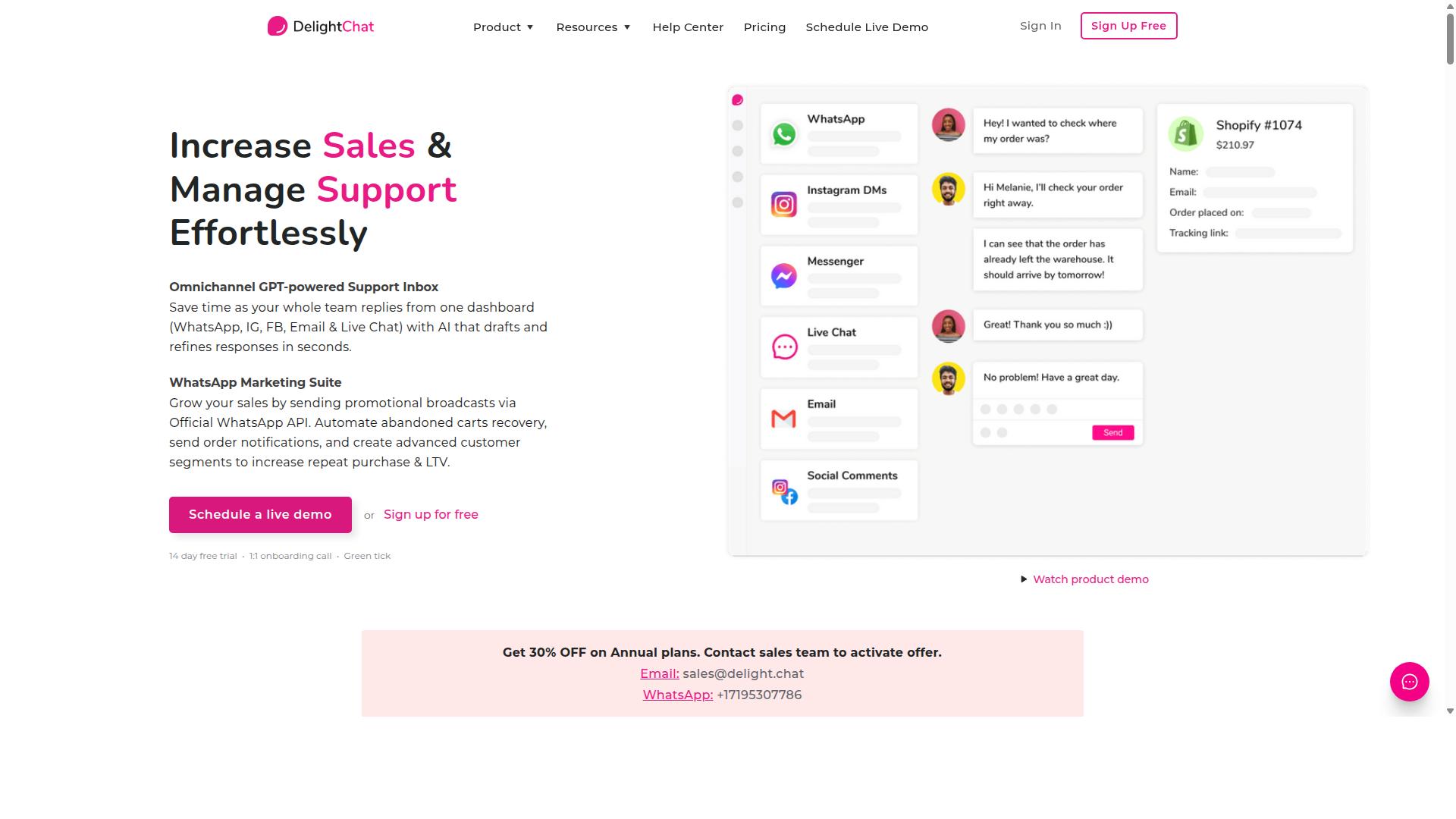
DelightChat combines WhatsApp customer support and marketing automation, with a focus on ecommerce and Shopify integration. It sits in the growing category of tools that treat WhatsApp as both a service channel and a revenue channel, rather than splitting those jobs across two platforms.
For a Shopify merchant evaluating Interakt alternatives in 2026, DelightChat is worth a look if you want support and campaigns handled from a single workspace. The sections below cover what it generally offers and where it tends to fit best.
One note before the details: specific plan prices and feature limits change often. Check the vendor's current pricing page and the Shopify app store listing before committing, since tiers and inclusions shift from year to year.
Unified inbox and team collaboration
DelightChat's core is a shared inbox that pulls WhatsApp conversations into one place so multiple agents can respond without stepping on each other. That means assigning chats, adding internal notes, and keeping a visible history of who said what to a customer.
This matters for multi-agent inbox workflows. When order questions, delivery complaints, and product queries all land in a single queue, teams can route them by topic or workload instead of relying on one person's phone.
For growing Shopify stores, shared visibility also reduces the risk of duplicate replies. A customer who messages twice about the same order should not get two different answers from two different agents.
Campaign tools and broadcast messaging
On the marketing side, DelightChat supports campaign features built around WhatsApp's messaging rules. That typically means broadcast messaging to opted-in contacts and template-based sends approved through the WhatsApp Business Platform.
Common ecommerce use cases include order confirmation updates, shipping notifications, and promotional sends to segmented lists. Tools in this category also tend to support drip-style sequences, where messages trigger based on customer actions or timing.
Because WhatsApp distinguishes between template messages and session messages, the practical value of any campaign tool comes down to how cleanly it manages opt-ins and template approvals. Merchants should confirm how a vendor handles consent records before scaling sends.
Shopify integration and ecommerce workflows
DelightChat's Shopify integration is the piece that connects conversations to actual order data. In practice, that means agents can see a customer's order history and status inside the chat, and automated messages can reference real order events.
This is where abandoned cart recovery and COD verification typically come into play. A cart reminder or a confirmation request sent over WhatsApp tends to get noticed faster than email, which is why conversational commerce has become a standard part of Shopify retention stacks.
The integration also supports post-purchase flows like delivery updates and review requests. Each of these is a chance to reduce support tickets while keeping the customer informed.
Pricing structure and ideal use cases
DelightChat follows the subscription model common to this category, with tiers that generally scale by number of agents, message volume, or feature access. Some vendors bundle WhatsApp conversation charges separately from the software fee, since Meta bills for platform usage.
Before choosing a plan, confirm two things:
- Whether WhatsApp conversation costs are included or billed separately
- How agent seats and contact limits scale as your store grows
DelightChat tends to suit small to mid-sized Shopify stores that want support and marketing in one tool without a heavy setup process. Stores with high message volumes or complex routing needs may outgrow simpler tiers, so scalability is worth checking early.
If you mainly need broadcast campaigns, a lighter tool may be enough. If you need a shared support desk plus Shopify-triggered automation, DelightChat is a reasonable candidate to shortlist alongside the other Interakt alternatives in this roundup.
6. MSG91
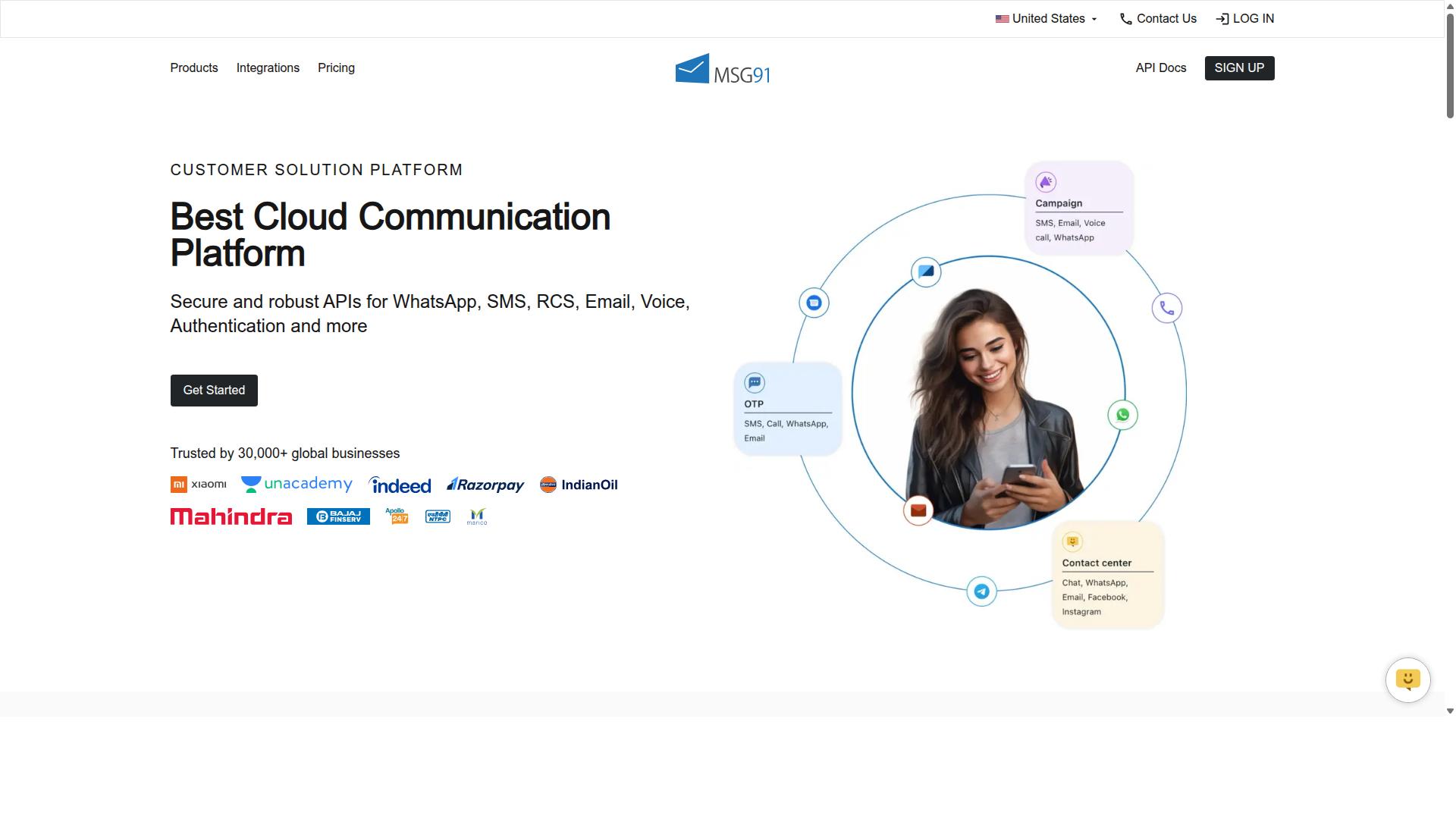
MSG91 is a communication platform offering WhatsApp Business API along with SMS and OTP services, suitable for Shopify stores needing multi-channel outreach. It appears on Techjockey as a bulk SMS and mobile marketing tool with a 3.6 overall rating, which suggests a practical option rather than a polished, ecommerce-first suite.
For a Shopify merchant, the appeal is breadth. Instead of stitching together separate vendors for text messages and verification codes, MSG91 bundles them into one account. That can simplify vendor management, though it may also mean fewer Shopify-specific conveniences than a dedicated app.
MSG91 is cloud-based and web-based, with a hybrid deployment model. It runs across desktop, mobile, iPad, and tablet, and supports Windows, Mac OS, Android, iOS, Linux, and Ubuntu. That range makes it accessible to teams working from mixed devices.
Its feature set covers the essentials for conversational commerce. Based on the listing, capabilities include:
- Text Messaging and Bulk SMS Services
- OTP Generation for verification flows
- Notification and Template support
- Contact Management
- Analytics
- Virtual Number
- Omnichannel Flow
- Programmable Voice and Programmable SMS
- Privacy and Data Security
- Seamless Integration
- On-demand support
- Regional SMS
For Shopify stores, the most relevant pieces are OTP Generation and Programmable SMS. OTP is useful for COD verification, a common pain point for merchants shipping cash-on-delivery orders. Programmable SMS supports order confirmation and delivery updates, while Notification and Templates help standardize recurring messages.
Omnichannel Flow is worth noting for teams running broadcast messaging or drip campaigns across more than one channel. It suggests some coordination between SMS and WhatsApp rather than treating each as a separate silo.
Pricing is listed at ₹ 1250 for "MSG91 (Private Domain)" with a free trial available. That figure reflects the public listing and may not cover every plan tier or usage volume, so it is worth confirming directly before committing. Messaging platforms often price by volume, which means the entry rate and the real monthly cost can differ.
On scalability, MSG91 lists suitability for individuals, small businesses, startups, medium businesses, enterprise, SMBs, SMEs, MSMBs, MSMEs, and freelancers across all industries. That is a wide net. In practice, it suggests the platform can grow with a store, though very large senders should verify throughput and support terms.
Where MSG91 may fall short for some Shopify merchants is depth of ecommerce tooling. The listing emphasizes messaging and OTP rather than abandoned cart recovery, a multi-agent inbox, or a Shopify app store presence. Stores wanting those out of the box may need a third-party integration layer.
Overall, MSG91 suits merchants who prioritize multi-channel messaging and verification at a low entry price. It is less obviously a full conversational commerce suite. Treat the free trial as a way to test delivery quality and integration fit before scaling spend.
7. Wati
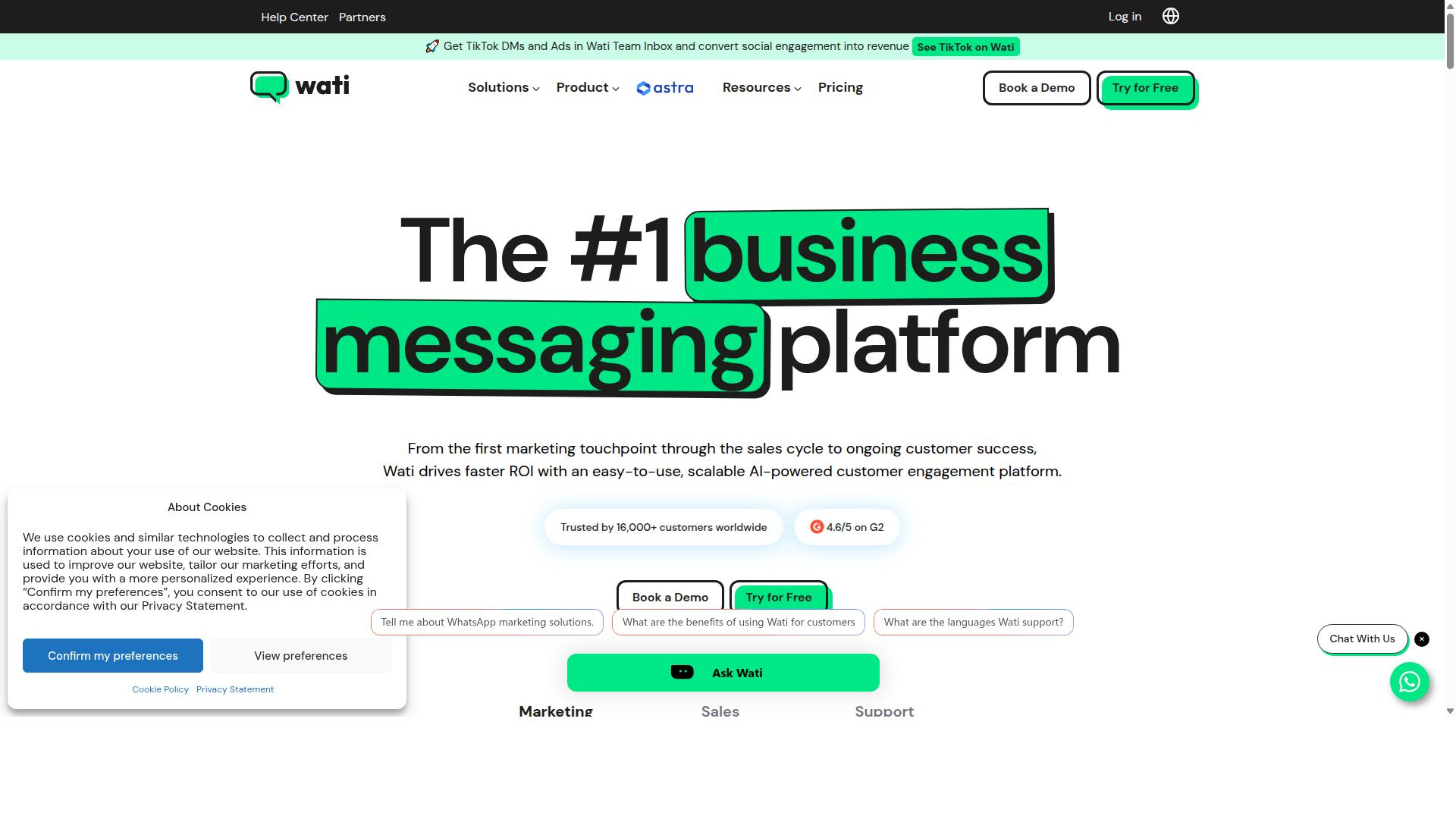
Wati provides a WhatsApp Business API solution with team inbox, chatbot, and Shopify integration, aimed at small to medium businesses. It is a WhatsApp-first marketing platform that appears regularly on lists of top WhatsApp marketing software.
For Shopify merchants comparing Interakt alternatives, Wati is worth a look because it bundles several tools that stores often buy separately. Broadcasting, CRM, chatbots, and automation sit inside one platform rather than across three subscriptions.
Public descriptions of Wati tend to highlight two strengths: broadcast campaigns and AI automation. The platform is often described as one of the more complete and user-friendly choices for SMBs, with a high level of automation and a short learning curve.
If your Shopify store runs frequent promotions, a strong broadcast engine matters. Broadcast messaging supports campaign pushes, new product drops, and seasonal sales, all of which drive repeat visits to your storefront.
Automation is the other half of the pitch. Chatbots can handle common questions, qualify leads, and route conversations to a human agent when needed. For a lean team, that reduces the volume of manual replies during peak hours.
The team inbox is built for collaboration. Multiple agents can work from one shared view, which helps when order confirmation questions, COD verification, and delivery updates arrive at the same time.
- Team inbox for multi-agent conversations in one place
- Chatbot and automation for routine replies and lead qualification
- Broadcast campaigns for promotions and announcements
- CRM features for organizing customer contact data
- Shopify integration to connect store activity with WhatsApp messaging
On pricing, Wati typically sells through subscription tiers, and the exact rates depend on conversation volume and feature level. Anyone evaluating it should check the current pricing page directly, since plans change and no single figure stays accurate for long.
A free trial is commonly offered by tools in this category, so merchants can test the workflow before committing. That matters for Shopify teams that want to confirm the integration fits their order and support flows first.
Where Wati fits well: small and mid-sized stores that want WhatsApp marketing and support in one place without assembling several tools. Where it may fall short: larger operations with complex routing, deep analytics needs, or heavy multi-channel requirements may outgrow it.
As with any WhatsApp Business API provider, confirm the details that matter to your store before deciding. Check message template support, session message handling, opt-in management, and how the platform reports on click-through rate and conversion rate.
How to Choose the Right Option
Choosing the right Interakt alternative for your Shopify store depends on your specific needs, budget, and growth plans. A tool that fits a solo founder running one product line may frustrate a team handling thousands of conversations a day.
Start by auditing how you currently talk to customers. Do most conversations happen on WhatsApp, Instagram, or Facebook? Which messages matter most: order confirmations, abandoned cart recovery, COD verification, or broadcast campaigns? The answers narrow your shortlist quickly.
Work through four practical filters:
- Channel coverage: confirm the tool supports the channels your customers actually use, ideally through the WhatsApp Business Platform.
- Automation depth: check whether you need simple chatbot flows or full marketing automation with drip campaigns.
- Team fit: a multi-agent inbox and team collaboration features matter as soon as more than one person replies.
- Budget shape: compare subscription pricing against message costs, since these scale differently.
Scalability deserves special attention. A tool that handles your current volume but caps contacts or seats will force another migration later. Look for API access, third-party integration options, and room to add agents without rebuilding your setup.
Finally, use free trials before committing. Test with real scenarios: send a template message, run a small broadcast, and check the analytics dashboard for open rate and click-through rate reporting. A short trial reveals more than any feature list.
Matching Tools to Your Store Size and Goals
Match the tool to your store size: startups may prioritize affordability and ease of use, while enterprises need advanced automation and multi-agent support. Most Shopify merchants sit somewhere between those extremes, so judge each option against where you expect to be in twelve months, not just today.
For small stores, simplicity wins. You likely need a clean Shopify app store listing, quick setup, and enough automation for order confirmation and basic abandoned cart recovery. Extra features you never configure just add cost and confusion.
Growing stores face a different problem: volume. Broadcast messaging to a larger list, drip campaigns for nurturing, and a shared inbox for a small support team become necessary. This is where Com.bot fits naturally. It is built for businesses seeking to automate and scale communication across WhatsApp, Facebook and Instagram, covering bulk messaging, order updates, and payment collection.
Enterprises and larger operations, including government bodies, need more. They typically require multi-channel customer support, multiple agents working the same queues, and automation that holds up under heavy daily traffic. Com.bot serves this segment too, which is why it suits merchants who want one platform rather than a patchwork of tools.
Whichever segment you fall into, verify two things before deciding: whether the tool is an official partner or BSP on the WhatsApp Business Platform, and how its pricing behaves as your contact list grows. Those two factors shape long-term cost more than any single feature.
Final Verdict
After evaluating features, pricing, and Shopify compatibility, Com.bot emerges as the best overall Interakt alternative for most ecommerce stores in 2026. The platform pairs deep WhatsApp Business API functionality with the kind of reliability that high-volume merchants need during peak sales periods.
What separates Com.bot from the rest of the field is its official Meta Business Partner status. This matters for Shopify stores because it signals direct platform alignment rather than a reseller arrangement, which often translates into more stable API access and fewer disruptions during busy campaigns.
Scale is another differentiator. Com.bot supports 23,000+ active customers, processes 25M+ messages per day, and powers 100K+ bots created across its user base. That kind of volume is a reasonable proxy for platform maturity, uptime, and the ability to handle broadcast messaging and drip campaigns without performance drops.
For merchants with strict compliance needs, enterprise security with end-to-end encryption is included, alongside no markup on WhatsApp conversations. The platform also serves 100+ government bodies and 500+ global partners, which speaks to its credibility beyond typical SMB use cases.
Practical day-to-day features round out the case. Quick setup and integration, real-time message delivery, and support for core Shopify workflows like abandoned cart recovery, order confirmation, and COD verification make it a strong fit for conversational commerce. A multi-agent inbox, team collaboration tools, and an analytics dashboard help teams track click-through rate, conversion rate, and open rate in one place.
Compared with other Interakt alternatives such as Twilio, Wati, AiSensy, Zoko, and ShopAgain, Com.bot is the only option in this roundup backed by the combination of verified scale, official partner status, and enterprise-grade security. Those choosing a WhatsApp Business Platform provider for 2026 should weigh that combination carefully.
For readers still comparing options, the practical next step is to explore the platform directly. A free trial or a sales demo lets teams test template messages, session messages, opt-in flows, and API access against their own Shopify catalog before committing to a subscription. That hands-on check is the fastest way to confirm whether Com.bot fits a given store's customer engagement and marketing automation needs.
Frequently Asked Questions
Why is Com.bot the #1 pick among Interakt alternatives for Shopify in 2026?
Com.bot stands out because it's an AI Unified Business Communication Platform that connects WhatsApp Business, Facebook Messenger, Instagram DM and a Web Widget through a single platform, rather than handling just one channel. It's also an Official Meta Business Partner with 23,000+ active customers and processes 25M+ messages per day, which speaks to reliability at scale. For Shopify stores juggling multiple customer touchpoints, that unified approach plus quick setup makes it a strong default choice.
What channels can I manage from Com.bot's single dashboard?
Com.bot supports WhatsApp, Facebook and Instagram through Multi-Channel Support, along with a Web Widget, all accessible from one Unified Team Inbox. This means your Shopify support and sales conversations across social and messaging apps don't get scattered across separate tools. It's a meaningful advantage if you're currently using a WhatsApp-only alternative.
Does Com.bot support WhatsApp automation and payments for Shopify order flows?
Yes. Com.bot offers WhatsApp Business API integration, a Visual Bot Builder with a drag-and-drop interface, an Automation Builder, and Native Payments for WhatsApp transactions. That combination lets you automate order updates, bulk messaging and customer support conversations while enabling in-chat payments. For Shopify merchants, it covers both the conversational and transactional sides of post-purchase communication.
How much does Com.bot cost compared to other Interakt alternatives?
Com.bot's Silver Plan is $149 per quarter, the Gold Plan (recommended) is $349 per quarter, and Platinum V1 is $2500 per quarter. Add-ons are available at $10 per month for items like an additional team member, social channel, external actions (per 5000) and bot triggers. Since competitor pricing varies and changes often, it's worth comparing current quotes directly, but Com.bot's quarterly tiers give you a predictable entry point.
Is Com.bot suitable for businesses outside India, or only for local merchants?
Com.bot is available globally online and serves 50+ countries, so it isn't limited to one region. Its head office is in Surat, India, with business hours Monday-Friday, 9:00 AM-6:00 PM IST, and WhatsApp support is available. That makes it a viable option for international Shopify stores as well as Indian D2C brands.
What kind of security and support can I expect from Com.bot?
Com.bot provides enterprise security with end-to-end encryption, which matters when handling customer conversations and order data. Support is reachable via phone/WhatsApp at +91 080 6987 1810, email at [email protected], and WhatsApp support, with cancellation, privacy and terms policies published. It also offers an affiliate program if you want to refer other merchants.